Bill Oliver
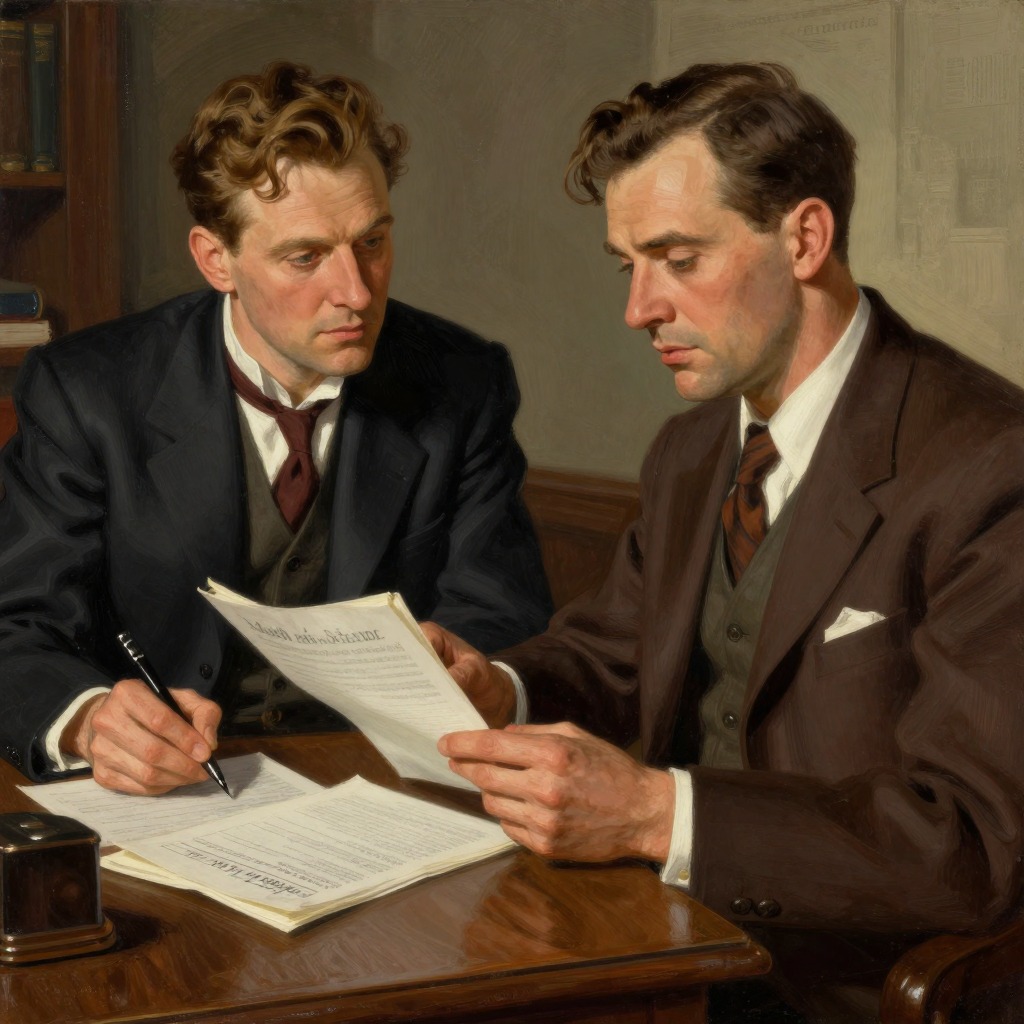
Bill Oliver is a wealthy sporting-goods magnate whose name, once spoken, carries the weight of a promise that Willy Loman believes can redeem his family. Oliver never appears onstage in Arthur Miller's Death of a Salesman, but his remembered words—"Biff, if you ever need anything, come to me"—become the fragile foundation on which Willy builds his last desperate hope. When Biff, at thirty-four and still adrift, returns home to Brooklyn, he decides to test that old promise, and the encounter that follows exposes the gulf between the dream Willy has nurtured and the reality Biff must finally face.
Identity and Background
Bill Oliver is the owner of a large sporting-goods firm for whom Biff Loman worked as a shipping clerk more than a decade before the play's present. In those days, Biff was a high-school football star, well liked and confident, and Oliver thought highly of him—so highly that he trusted Biff to lock up the place at night. When Biff quit, Oliver put his arm on Biff's shoulder and said, "Biff, if you ever need anything, come to me." That single gesture, recalled years later, becomes the talisman of Willy Loman's faith in his son's future. Willy insists that Oliver "loved" Biff, that Biff "could be big in no time" if only he would return to the city and ask for backing. The promise is never specified as a loan or a partnership; it is a vague, generous offer that Willy inflates into a certainty.
The Encounter and Its Collapse
On the day of the play's second act, Biff dresses in his blue suit and goes to see Oliver, full of hope that he can secure ten thousand dollars—or even seven or eight thousand—to buy a ranch out West. He waits six hours, sending his name in repeatedly, even trying to date Oliver's secretary to gain access. When Oliver finally emerges, he does not remember who Biff is. The man who once put an arm around his shoulder walks past him without recognition. Biff, stunned and humiliated, realizes that he was never a salesman for Oliver at all; he was a shipping clerk. The entire edifice of his father's belief—that Biff was a natural salesman, that Oliver valued him, that a bright future awaited—collapses in a single moment. In the waiting room after Oliver leaves, Biff, acting on an impulse he cannot explain, takes Oliver's fountain pen from the desk and runs down eleven flights of stairs. The theft is not premeditated; it is the desperate, shameful act of a man who has just discovered that his life has been built on a lie.
Consequences and Thematic Significance
The encounter with Oliver forces Biff to confront the truth he has been running from for fifteen years. He tells his brother Happy, "I realized what a ridiculous lie my whole life has been. We've been talking in a dream for fifteen years." The dream is Willy's dream—that personality and being well liked will open every door—and Oliver's indifference proves it hollow. When Biff returns to the restaurant where his father waits for good news, he tries to explain what happened, but Willy refuses to listen, twisting the story into a narrative of success. Only when Biff produces the stolen pen does the truth break through, and the confrontation that follows—in which Biff finally declares, "I'm a dime a dozen, and so are you!"—becomes the play's emotional climax. Oliver himself never appears, but his pen, a physical object that Biff cannot return, becomes the emblem of the theft that has defined the Loman family: the theft of a dream that was never theirs to claim. In the end, Oliver's forgotten promise is not the key to Biff's future but the key to his liberation, for it forces him to see that he must stop chasing the phantom of success his father has worshipped and accept the life he actually wants—work outdoors, with his hands, far from the offices and buyers who do not remember his name.